
Oxygen Generator
High-purity, continuous, and economical oxygen production.
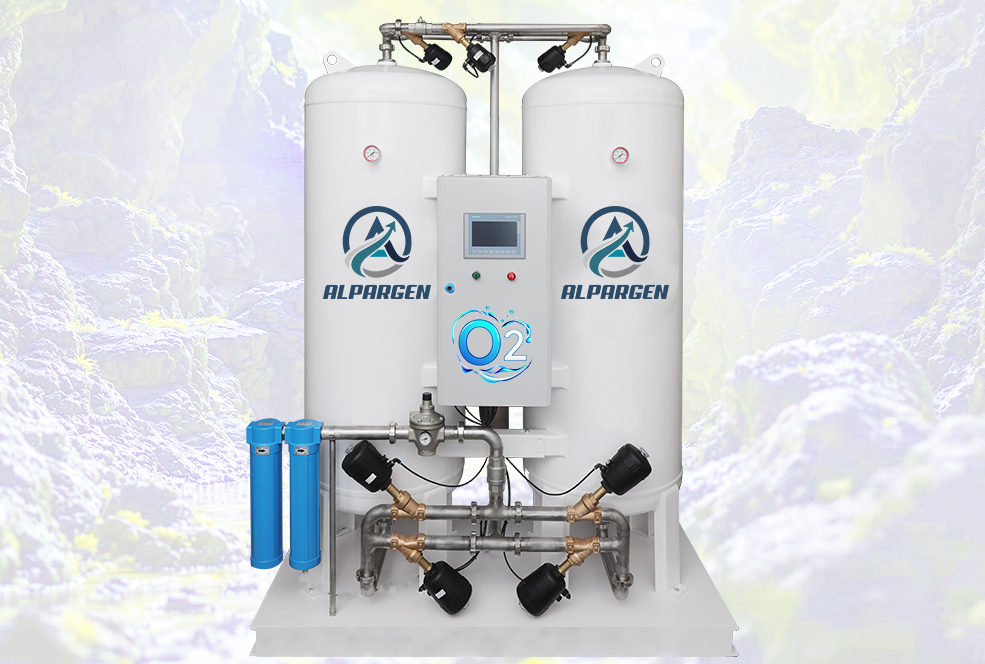
Alpargen oxygen generators produce high-purity oxygen from ambient air using PSA (Pressure Swing Adsorption) technology. They offer reliable and efficient solutions with a wide range of applications, from industrial facilities to healthcare.
Advantages
- 93–95% (or according to your specifications) oxygen purity
- 24/7 uninterrupted production
- Low operating costs
- Eliminates the need for cylinders/logistics
- Energy-efficient system
- Long-lasting and durable construction
Technical Specifications
- Capacity range 0.5 – 2000 (Nm³/h)
- Purity percentage (%) 95 – 99.99
- Operating pressure 10 bar
- Noise level Max. 85 dB(A)
- Technology PSA – DIA
- Energy consumption System components (compressor, dryer, tank, etc.)
Areas of Application
- Hospitals
- Metal cutting (laser/plasma)
- Water treatment
- Fish farms
- Chemical industry
- Glass and ceramics production
How do oxygen generators work?
Alpargen Oxygen Generators produce oxygen from the air using PSA (Pressure Swing Adsorption) technology. This process takes place in 4 basic steps:
- Air Compression: Ambient air is drawn in by a compressor, filtered, and fed into the system at high pressure.
- Nitrogen Capture: The compressed air is sent to tanks filled with Zeolite (Molecular Sieve) inside the generator. Zeolite traps nitrogen molecules in the air while allowing oxygen molecules to pass through.
- Purification: The oxygen gas, now 93-95% pure and free of nitrogen, is transferred to a storage tank and made ready for use.
- Discharge and Replenishment: The pressure in the saturated tank is reduced, releasing the trapped nitrogen. The system continuously repeats this cycle between the two tanks, ensuring uninterrupted gas flow.
In short: The system traps nitrogen by passing air through a filter (zeolite) and delivers pure oxygen to your facility. It requires no chemical raw materials; all you need is air.
Are oxygen generators advantageous compared to cylinder systems?
Oxygen generators are a more advantageous solution for many businesses because they produce oxygen continuously and on-site compared to cylinder systems. They eliminate operational processes such as cylinder filling, transportation, and inventory tracking, reducing total costs in the long run. They also increase safety by reducing the risks of high-pressure cylinder storage and ensure uninterrupted oxygen supply. In applications with continuous consumption, generators stand out as a practical and economical alternative.
What infrastructure is required for the assembly?
Oxygen generator installation generally does not require extensive construction infrastructure; a suitable site and basic utility connections are sufficient. Prior to installation, an on-site survey is conducted to clarify the needs based on capacity and intended use.
Essential infrastructure
- Electrical supply: Power supply line, fuse/circuit breaker, and grounding suitable for the device’s power rating.
- Installation area: Level floor, sufficient service/maintenance clearance, and secure placement.
- Ventilation and environmental conditions: Good ventilation for heat dissipation, dust and moisture control.
- Air supply (in PSA systems): Internal air supply for compressor models; compressed air line and air drying/filtration for systems using external compressors.
- Oxygen line connection: Piping/distribution line to points of use (and pressure regulation if necessary).
- Storage and backup (optional): Oxygen tank/buffer, emergency backup cylinder.
- Condensation/waste drainage: Drainage connection for filter and dryer condensate.